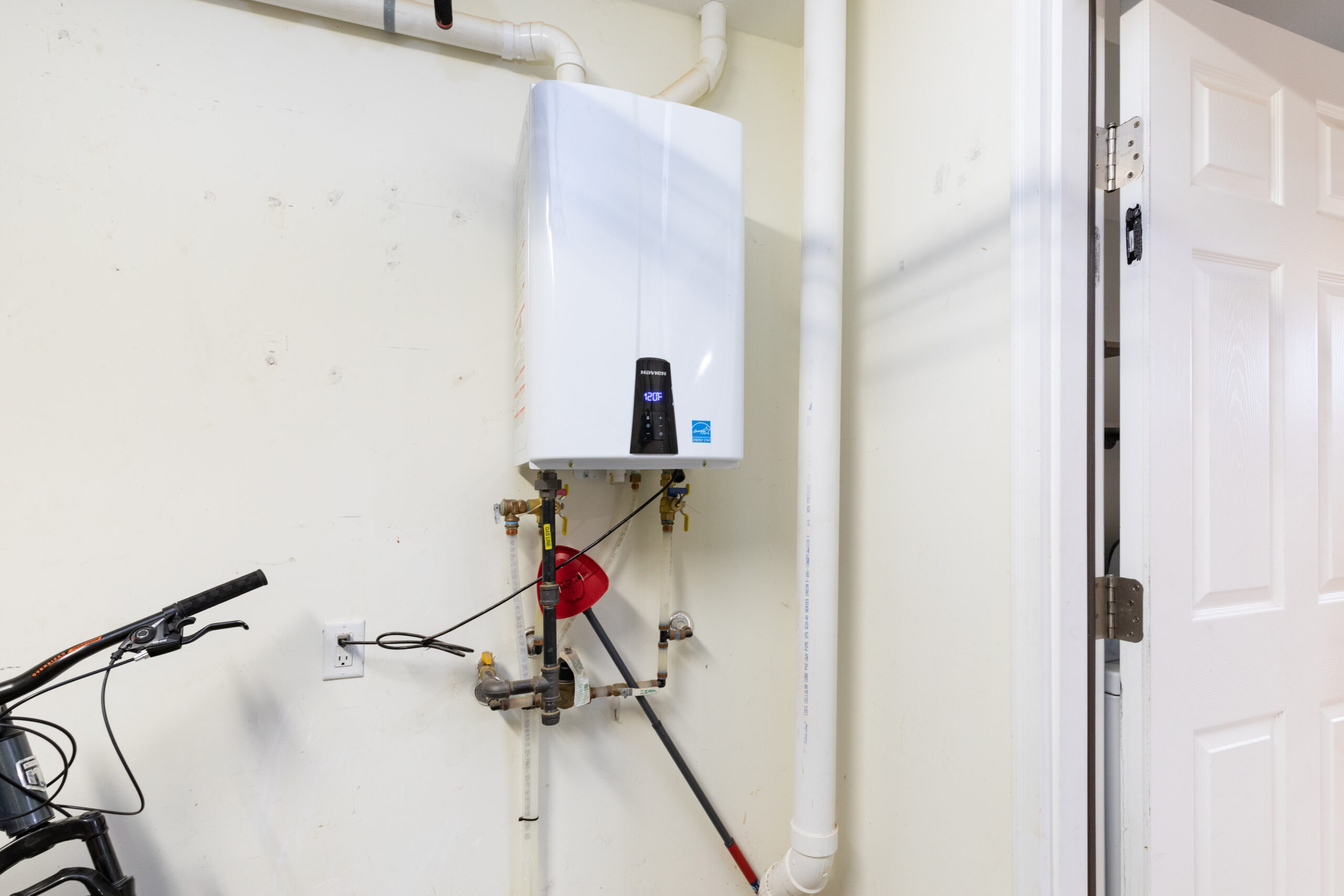
Choosing between a tankless and conventional water heater is not as simple as picking the newer option. The right system depends on your household’s hot-water demand, available space, existing equipment, and installation conditions.
For Amherst homeowners, the best choice is the one that is properly sized and matched to the home. A high-quality system can still fall short if it is not selected for the way your household actually uses hot water.
How Do Tankless and Conventional Water Heaters Differ?
A tankless water heater heats water as you need it instead of keeping a large supply hot in a storage tank. A conventional water heater stores heated water so it is ready when a fixture or appliance needs it.
Because tankless systems do not continually maintain a tank of hot water, they avoid the standby heat loss associated with storage systems. However, both types still need to be sized correctly for the household.
Which System Handles Hot Water Demand Better?
Hot-water demand is one of the biggest factors in choosing between these systems.
A tankless unit is rated for how much hot water it can deliver at a given time. If several showers, faucets, or appliances need hot water at once, the combined demand can exceed the capacity of an undersized unit.
Conventional water heaters approach demand differently. They keep a set amount of heated water available, which can help during periods of heavier short-term use. Once that stored supply is depleted, the system needs time to heat more water.
Neither approach is automatically better. Household size, daily routines, and how often multiple fixtures run at once should help guide the decision.
Which Option Uses Energy More Efficiently?
Tankless systems can reduce energy use associated with keeping stored water hot around the clock. That can make them an efficient option for certain homes.
Still, a tankless water heater does not guarantee lower operating costs in every situation. Actual energy use depends on factors such as fuel type, household demand, equipment efficiency, and how the system is sized.
A conventional unit may also make practical sense when it matches the household’s needs and existing setup. Instead of choosing based on one efficiency claim, homeowners should compare the complete system and how it will perform in their home.
How Do Space and Installation Needs Compare?
Tankless units generally take up less space because they do not require a large storage tank. That can make them appealing in homes where mechanical-room space is limited.
However, switching from a conventional unit to tankless may involve more than removing one system and installing another. Depending on the home and equipment, changes to the gas supply, venting, electrical requirements, or other components may be necessary.
That is why a professional assessment should come before equipment selection. You can learn more about tankless water heater installation and the factors that affect whether one of these systems fits your home.
Why Does Proper Sizing Matter in Amherst, NY?
Sizing is especially important for tankless systems because they must heat water as it flows through the unit.
One factor is incoming water temperature. During colder weather, the system may need to raise the water temperature by a greater amount before delivering it at a comfortable temperature. That can affect the flow rate a tankless unit can support.
Peak household demand also matters. A system selected for one or two simultaneous uses may not perform the same way in a home where several fixtures regularly need hot water at once.
For Amherst homeowners, this is why equipment quality and proper matching should go together. The goal is not to install the same system in every home. It is to choose equipment that fits the household’s demand, fuel source, installation conditions, and comfort expectations.
Which Water Heater Is Better for Your Home?
A tankless system may be a good fit if you want a compact unit, on-demand hot water, and a system designed around your household’s peak flow needs.
A conventional water heater may make more sense when stored hot water fits your usage patterns or when the existing home setup supports a straightforward replacement.
The better option depends on the home. Looking at capacity, infrastructure, energy use, available space, and household routines provides a more useful answer than choosing one technology by default.
Choose a Water Heater That Fits Your Amherst Home
At Heatwave Heating & Cooling, we focus on installing high-quality systems that are properly matched to each home rather than relying on one-size-fits-all recommendations. Our HVAC technicians can evaluate your hot-water needs, existing equipment, and installation conditions before recommending an appropriate option.
That approach helps ensure the equipment selected for your Amherst home is designed around how your household actually uses hot water.
If you are comparing tankless and conventional water heaters, contact us to discuss which option may be the right fit for your home.